Beyond the Beach: Venice, Florida's Best-Kept Secret

Stepping Back in Time: A Guide to Venice, Florida's Historic District
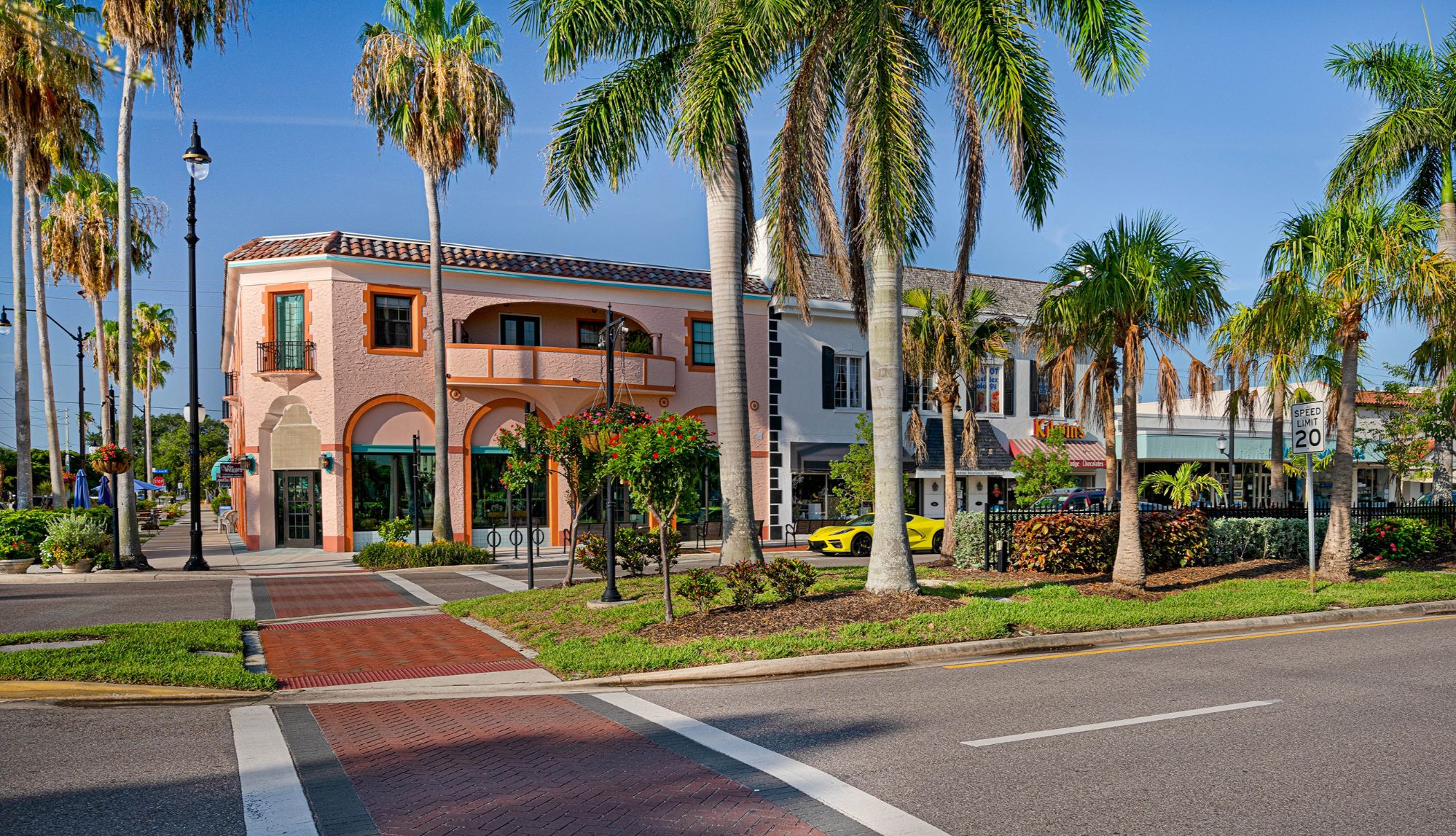
Most people come to Venice, Florida for the beaches, the shark teeth, and the famously laid-back Gulf Coast pace. But tucked into the heart of the city is something far rarer: one of the most carefully planned, beautifully preserved historic districts in the entire state. Venice wasn't a town that simply grew up over time. It was designed — deliberately, artistically, and with a vision that still shapes daily life here a century later.
If you've ever strolled down Venice Avenue and felt like you'd wandered into a small Italian city, that's no accident. Here's the story behind Venice's historic district, and why it's well worth a visit.
A City Designed on Paper First
The story begins in 1926, in the middle of Florida's frenzied "Land Boom." Across the state, developers were racing to turn sleepy stretches of coastline into glamorous new communities, and Mediterranean Revival architecture — with its exotic, old-world charm — was the look that captivated northern visitors dreaming of a tropical escape.
Venice's developer was an unusual one: the Brotherhood of Locomotive Engineers, a national railroad workers' union that envisioned the city as a planned retirement and resort community for its members. To bring that vision to life, they hired John Nolen, a Harvard-educated planner widely regarded as the "dean of American city planning." Over his career, Nolen and his firm completed more than 400 projects, including comprehensive plans for over two dozen cities. Venice would become one of his masterworks.
Nolen's 1926 General Plan was remarkably forward-thinking. He laid out wide, paved boulevards with landscaped medians, a network of small parks scattered throughout the community, reserved land for schools and hotels, a golf course, a beachfront amphitheater, and even an agricultural zone known as Venice Farms. It was, in modern terms, a walkable and bike-friendly "Traditional Neighborhood Design" — decades before that phrase existed.
The Northern Italian Look
While much of boom-era Florida embraced a general Mediterranean Revival style, Nolen wanted something more specific for Venice. He chose Northern Italian Renaissance architecture as his interpretation of the theme, and it became the city's signature look between 1926 and 1929.
You can still read that vision in the details today: barrel-tile roofs, stucco walls in warm earth tones, arched windows and arcades, decorative ironwork, and ceramic tile accents. The effect is cohesive without feeling like a theme park — a real city that happens to share a consistent, graceful architectural language.
Some of the finest examples sit along the western, more residential stretch of Venice Avenue, where three grand Northern Italian mansions were built during the 1926–27 development period. Their prime location on the promenade between the water and downtown signaled real status in the young city. Many of these homes remain beautifully maintained and fully intact.
Boom, Bust, and a Long Road to Completion
Venice's story wasn't a straight line from blueprint to finished city. The Florida real estate boom collapsed in 1926 — right as the Brotherhood of Locomotive Engineers was preparing to sell its lots. The timing was devastating. Bankruptcy followed, the Great Depression deepened the disruption, and for the next several decades, attention to Nolen's careful plan faded.
During those years, the original Northern Italian motif gave way in places to Midcentury Modern construction, and many elements of the plan sat unfinished as late as the 1940s. But here's the remarkable part: the plan was never truly abandoned. Post-World War II development picked up the thread, and major elements of Nolen's vision were finally completed in accordance with his design around 1960.
In a way, this messy history made Venice richer. The city you see today is a layered place — a strong, enduring foundation laid by Nolen, with the texture of a community that genuinely evolved over time rather than freezing in a single decade.
Recognition and Preservation
By the late 20th century, interest in Nolen's work had revived, helped along by the broader New Urbanism movement that celebrated walkable, human-scaled town design. Venice began to recognize and protect what it had.
In 2009, the John Nolen Plan of Venice Historic District earned a place on the National Register of Historic Places, honoring Nolen's original urban design for its parks, street landscaping, and overall neighborhood plan. The district is generally bounded by Laguna Drive to the north, Home Park Road to the east, the Corso to the south, and The Esplanade to the west, and it preserves roughly 847 of the original 1,150 acres Nolen platted.
Within that larger district are three smaller districts also listed on the National Register, each reflecting Nolen's intent to provide housing across income levels: the Venezia Park District, the Edgewood District, and the Apartment District (also known as the Armada Road Multifamily District).
To keep the city's character intact, Venice established an Architectural Review Board and an Architectural Guidelines Handbook. New construction within the Historic and Venetian Theme districts is reviewed to ensure it stays compatible with the Northern Italian Renaissance style — which is exactly why downtown still feels so unified today.
What to See and Do
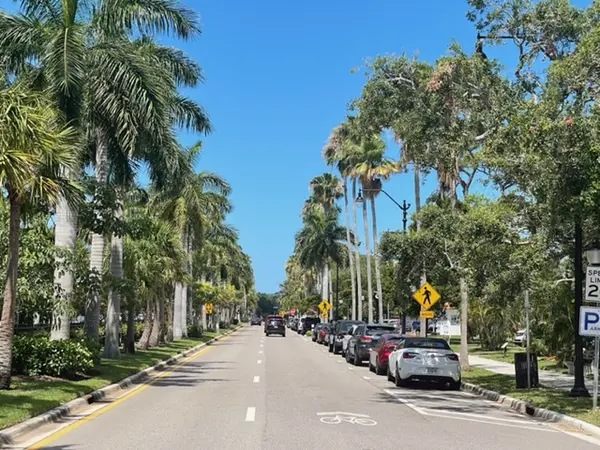
The best way to experience the historic district is simply to walk it. The compact downtown core — centered on Venice, Tampa, and Miami Avenues — is packed with more than 130 shops, boutiques, cafés, restaurants, and art galleries. Many of the storefronts have that wonderful "been here forever" quality, with vintage fixtures and hand-painted signs that make browsing feel like a trip back to an earlier Florida.
A few highlights worth seeking out:
- The historic downtown streetscape — Start on Venice Avenue and let the arcades, tile roofs, and shaded medians set the tone. Outdoor cafés make it easy to linger over lunch or dinner.
- Hotel Venice — Built in 1927 and designed by nationally prominent architect Leon Gillette, this was the central focus of the planned community and a symbol of the city's early ambitions.
- The 1927 Venice Train Depot — A beautifully preserved reminder of the railroad era that gave the city its start.
- Venezia Park neighborhood — Stroll these residential streets to see some of the earliest and finest Northern Italian homes, complete with decorative ironwork and ceramic tile detailing.
- Venice Museum & Archives — The place to dig deeper into Nolen's plan and the city's origins, with rotating exhibits on local history.
- The Venice Art Center — On Nokomis Avenue South, a hub for the area's lively arts community.
Why It Matters
What makes Venice's historic district special isn't just that it's old — plenty of places are old. It's that the city was built around a coherent, humane idea of what a good community should feel like: walkable, green, beautiful, and welcoming to people of all income levels. A century later, that idea still works. Residents and visitors are drawn to the same qualities Nolen designed for, even if they don't know his name.
So next time you're in Venice, give yourself an afternoon away from the sand. Wander the avenues, look up at the tile roofs, peek into the old shops, and imagine a planner in 1926 sketching out the city you're standing in. It's one of Florida's quiet treasures — and it's been waiting for you the whole time.
Categories
Recent Posts