The Story of Venice Island: How Florida's "Island City" Came to Be

Here's a fact that surprises a lot of visitors: the historic heart of Venice, Florida is an actual island. When locals talk about "the island," they mean the walkable, palm-lined stretch of downtown between the Intracoastal Waterway and Venice Beach — a place you reach by crossing one of three drawbridges. But Venice Island wasn't always an island, and the story of how it became one is woven through more than a century of pioneers, planners, cadets, fighter pilots, and even circus clowns.
Grab a coffee and settle in. This is the story of one of the Gulf Coast's most charming little islands.
Before the City: First Peoples and a Curious Name
Long before anyone dreamed of drawbridges, this land belonged to Florida's earliest inhabitants. Archaeological evidence shows Paleo-Indians lived in the area an astonishing 10,000 years ago, hunting animals that have since gone extinct. Their descendants, the Archaic peoples, left behind stone tools and camps that still turn up around Venice today. By the time European explorers arrived in the 1500s, the powerful Calusa people controlled this coast — and famously resisted Spanish attempts at settlement.
For centuries afterward, the area stayed wild and largely unmapped. With no roads leading in, early seafaring travelers navigated to the local bays by spotting a distinctive cluster of trees that, from the water, resembled a horse and carriage. And so the earliest known name for the area was born: Horse and Chaise.
Homesteaders and the Birth of a Name
The first real wave of settlers arrived in the 1870s. Among the pioneers was Robert Roberts, who established a homestead beside the bay that still carries his name — Roberts Bay. In the 1880s came Frank Higel, a settler who built a homestead and ran a citrus operation, producing everything from jams to orange wine.
Higel is also credited with giving the city its name. Reminded of the canals and waterways of Venice, Italy, he suggested "Venice" for the local post office, and the name stuck by 1888. Many of these early family names — Higel, Roberts, Curry, Blackburn — still appear today on Venice street signs and parks, quiet reminders of the people who first put down roots here.
A Socialite, a Railroad, and a Doctor's Dream
Venice's transformation from remote homestead country into a real town owes a lot to two ambitious dreamers.
The first was Bertha Honoré Palmer, a wealthy Chicago socialite who arrived on the Gulf Coast around 1910 and bought up an enormous tract of land. Her influence helped convince the Seaboard Air Line Railroad to extend its tracks southward, and she named the terminus Venice. Though the grand resort she imagined was never fully built, that railroad connection ended the area's isolation and set the stage for everything that followed.
The second dreamer was Dr. Fred Albee, a prominent New York bone surgeon who purchased a large parcel of Palmer's former holdings in 1916. Envisioning a beautifully planned community, Albee hired the nationally renowned city planner John Nolen to design it. Nolen's 1926 plan gave Venice its now-famous Northern Italian Renaissance look, with wide boulevards, landscaped parks, and graceful architecture. The Brotherhood of Locomotive Engineers — a national railroad union — bought much of the land to develop it during Florida's booming 1920s.
Then the boom collapsed. The 1926 real estate crash, followed by the Great Depression, left Venice with beautiful new buildings and far too few people to fill them. The young city teetered on the edge of becoming a ghost town.
Saved by Cadets: The Kentucky Military Institute
Rescue arrived from an unlikely source. In 1932, during the depths of the Depression, the Kentucky Military Institute (KMI) began bringing its students south to spend winters in Venice, moving into hotels and buildings left empty by the bust. The school later purchased properties outright, and for decades, cadets, teachers, and families would arrive shortly after New Year's and stay until Easter.
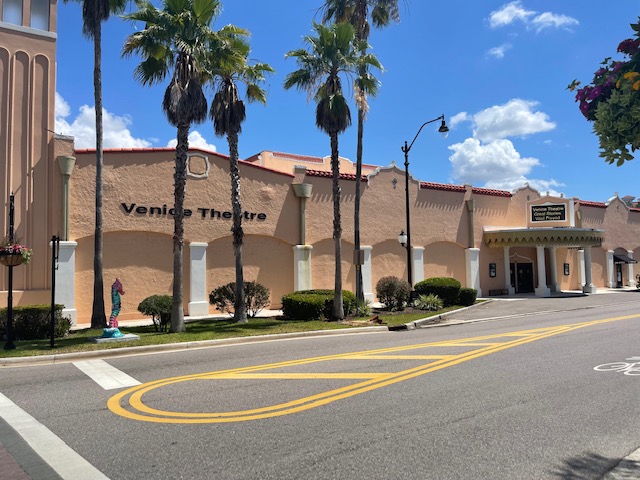
It's hard to overstate how important this was. KMI's presence pumped money and life into a struggling town, keeping its infrastructure and economy alive through its darkest financial years. The institute remained a fixture of island life until it closed its Venice operations around 1970 — and its legacy survives today in the name of the KMI Bridge at the island's north end, and in the old KMI gymnasium, which now houses the Venice Theatre.
Wings Over Venice: The Army Air Base
The next chapter arrived with World War II. In May 1942, the U.S. Army established the Venice Army Air Base on land just south of the growing town, training combat fighter pilots and ground crews. Over the life of the base, more than 20,000 servicemen passed through Venice — an enormous number for such a small community, and one that reshaped the local economy and identity.
After the war, in 1947, the base was handed over to the City of Venice with the condition that it always be used for aviation. It became the Venice Municipal Airport, which still operates today. You can even find a replica of the old air base entrance in Heritage Park, along the tree-lined median of West Venice Avenue.
Send in the Clowns: The Circus Era
Then came the chapter that gave Venice its most colorful identity. In 1960, the Ringling Bros. and Barnum & Bailey Circus moved its winter headquarters to Venice, using the same rail lines that had shaped the town's history. For more than three decades, until 1992, "The Greatest Show on Earth" called the island home.
The impact was magical. When the circus rolled into town by train, performers and animals would parade through the streets to their winter quarters. Legendary animal trainer Gunther Gebel-Williams became practically a local celebrity, drawing crowds to preview shows before each season's tour. Famed clown Lou Jacobs lived here, and in 1968 the circus founded its Clown College in Venice, training generations of performers in the Ringling style.
The population boomed alongside the spectacle, jumping from around 10,000 in 1957 to 27,000 by 1962. Even the town's authors got in on the era's charm — Walter Farley, author of The Black Stallion, lived in Venice and helped establish the public library. Today, that circus heritage lives on at the Venice Train Depot, complete with a joyful statue of Gebel-Williams, and in the name of the Circus Bridge at the island's south end.
The Waterway That Made an Island
For all its history, Venice Island wasn't technically an island until relatively recently. John Nolen's original 1926 plan didn't include the Intracoastal Waterway at all.
That changed in the 1960s. As part of the massive West Coast Inland Waterway project, a dredge named the Dauntless began carving a channel through the heart of historic Venice around 1960, advancing at roughly two miles per month. When the $15.5 million waterway was dedicated in 1967, it had done something remarkable: it separated the oldest part of the city from the mainland, turning downtown Venice into a true island — accessible only by bridge.
Rather than isolating the town, the waterway gave it new life. It opened up boating and water tourism, boosted the appeal of waterfront real estate, and created the scenic banks that now form the Venetian Waterway Park, a favorite route for walkers, cyclists, and joggers.
Venice Island Today
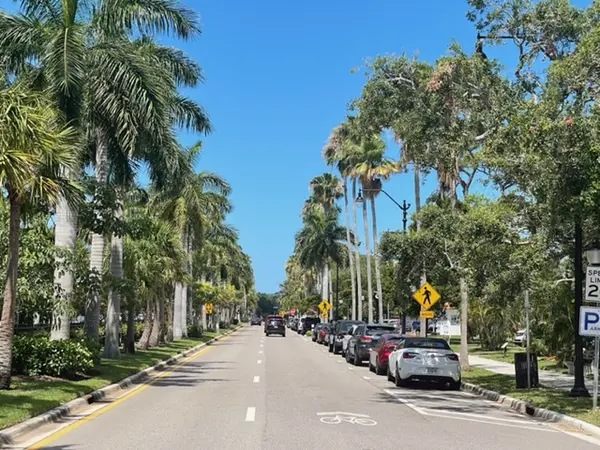
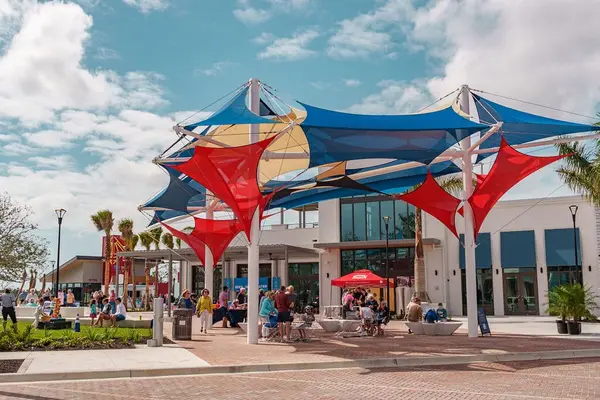
Walk down West Venice Avenue today and you'll find the past and present blended beautifully together: Mediterranean-style buildings from the 1920s, sidewalk cafés, boutiques, and art galleries, all on a compact, walkable island framed by water on one side and the Gulf on the other. The city is a designated Florida Main Street community, honored for its commitment to historic preservation, and it proudly wears the title "Shark Tooth Capital of the World," thanks to the fossilized teeth that wash up on its beaches.
To dig deeper, visitors can explore the 1927 Venice Train Depot or the Venice Museum & Archives, housed in the historic Triangle Inn. Historic markers and walking tours dot the island, telling the stories of the settlers, cadets, pilots, and performers who each left their mark.
From Horse and Chaise to the circus capital of America, from Depression-era rescue to a channel dredged straight through downtown — Venice Island's history is anything but ordinary. And the best part? You can still walk right through the middle of it, one drawbridge at a time.
Categories
Recent Posts